Happy blogday! It’s a surprise party, and your gift is a new URL. The unofficial blog is growing up and moving out of home, thanks to GP32X member atomicthumbs and his bastion of blog hosting bunnitude.com. WordPress.com has been more than good to us, but private hosting allows us more control to tweak and add features. Kicking off the feature bonanza is our new embedded IRC client, tapping you directly into #openpandora at Freenode. Swish! Want some links?
Hate change? Never fear. We’re the same blog team, covering the same stuff, displaying the same flippant disregard for your sanity. We’ll just be squeezing it out of a different tube. This old blog will stay in place as an archive, and heaven forbid, a safety net should there be some kind of bunny uprising in the new digs. The only thing missing from the new location right now is a sidebar link to chat, which is on the way. If you’re IRC inclined, bookmark that one now.
Ok, show’s over! Get clicking, there’s new news over there!
After nigh on a year of sweat, tears and beer, Viridior, JavaJake and the rest of the Gentoo Pandora team have restructured, repurposed and renamed their project Neuvoo. (Newbie tangent: What’s Gentoo? It’s a linux distro which, if your geek-fu is strong, you can install instead of Angstrom). The new broader focus will see other platforms join Pandora on their target list (think Beagleboard, Touchbook), giving their code more fields to frolic in, and its users a wider range of software. In addition, they’ll be bending over backwards to make sure you don’t need “I compile source code for breakfast” printed on your t-shirt to get in the door, with a binary repo in the works so you won’t miss out on the Pandora apps your Angstrom friends are using. Bravo.
Remember Alf? He’s back, in pog form. Remember PandoraPanic? It never left. The WarioWare-inspired community project has been bubbling away in the background for the past year, absorbing new talent and minigames along the way. Recent developments include some retrolicious 16 bit graphics from Dragons_Slayer, and a WIP gameplay video from Rockthesmurf. Ubiquitous porting machine Pickle even has his hat in the ring.
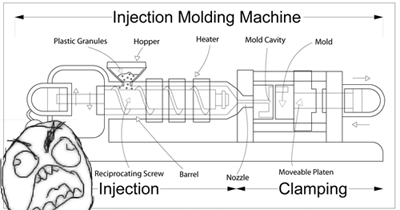
Case moulds. They’re slow old things to make. When will the moulds be done? Soon. What are we waiting for? The moulds. Thanks blog people, big help. But maybe not everyone out there knows exactly what these moulds are? If that’s you, pull up a pew. Rather than reinvent the wheel, we’ll just tap into some existing educational resources. This technology students page offers a (deceptively) simple overview of the moulding process. They’re not making a gaming handheld, but they are making a blue hedgehog… it’s the best we could do. (You don’t have to take the test at the end). For a more serious read, there’s the slightly less fun Wikipedia page. Pandora’s moulds are currently in the machining phase.
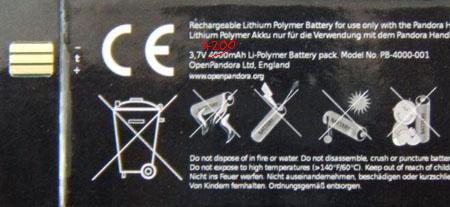
Craigix: Oh, forgot to tell you all, the battery was upped to 4200mah and our tests are showing this monster is going to give something like 14 hours
A device that allows you to watch a 10 hour Eurovision marathon, then clock Mario 16 times? Finally! A nice win for frequent flyers, mountain climbers, and anyone who doesn’t carry mains voltage in their backback. Thanks to calc84maniac for spotting it first.
We knew it could happen. We hoped it was happening. Today, we know it is. A new face appeared on the GP32X boards over the weekend; a coder going by the name of Ari64. If GP32X had an award for “best first post ever”, this would be leading the field.
I have rewritten the dynamic recompiler for Mupen64plus to generate ARM code. This will run on OpenPandora, TouchBook, and BeagleBoard.
That’s right folks. Nintendo 64 emulation, for real reals. Ari64 says he’s been working on this for “around 4-5 months,” wisely keeping a lid on the project to avoid an onslaught of premature hype. There is still work to be done of course:
Unfortunately OpenGL acceleration does not work. It is possible to use software rendering, but it is very slow and some of the textures display incorrectly. Since several people are working on OpenGL ES libraries, I am posting this as-is for testing purposes.
As you’d expect, some of the scene’s best known coders are now hovering around this like kids at a candy store. The next few weeks should be interesting, but before you get caught on the hype train, take a moment to tip your hat to the scene’s newest household name: Ari64.
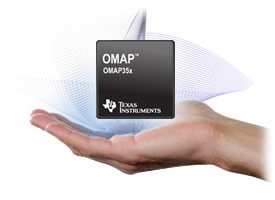
We’re used to speed bumps on this road; we’re not so used to spec bumps. Code guru Exophase has discovered some interesting revisions to the OMAP3530 data sheet, which seems to be giving us a little more head room in terms of clock speed than we had before. The Cortex-A8, known to us as a “600Mhz+” processor, is now being listed as “Up to 720MHz”. Also getting an on-paper boost is the DSP core, which has jumped from 430Mhz to 520Mhz. MWeston speculates:
You might have noticed the lack of updates this week. Well, good news! There aren’t any now either. The case moulds are reportedly going smoothly, and all we can really do is wait for them to finish. But a quiet blog is a cold, dark hell, so a little forum trawling was in order. Below are some questions, answers and pieces of banter from the last week on GP32X. Consume slowly. You need to conserve your strength.
Last week we heard that Matchbox may be superseded by E17, as Pandora’s default window manager. Today, we’ve seen new footage of Pmenu. So what does it all mean? What’s going to greet us on that screen when we first flip the lid? If you’re feeling a little in the dark, this article aims to bring the light. We’ll start with a brief description of Pandora’s operating system, then we’ll get into the GUIs. If you’re a seasoned Linux user, and you’re easily offended by gross simplifications (which all Linux users are), feel free to skip the first bit.
Cpasjuste has shared a new video of Pmenu, the graphical launcher that will ship with Pandora. Unfortunately it’s a little blurry, but you don’t have to tell Cpasjuste this. He’s already called it crappy himself. Noteworthy in this installment is the implementation of Pandora’s PND packaging system. In a nutshell, a .PND file is the container that Pandora applications live in. Download this one file (eg. Quake2.pnd), drop it onto your SD card, and watch as your new Quake2 shortcut appears in the menu automatically. Magic!